Last Updated: September 15, 2026
In my childhood, fruit juice was a reasonably standard drink. My parents used to give me apple or orange juice as a vitamin C supplement. They knew the juice contained sugar, but their main concern was that the sugar would provide me with tooth decay.
We now know that there are good reasons to be concerned about the sugar in these drinks.
Taking too much sugar increases your risk of having a stroke and developing heart disease, type 2 diabetes, tooth decay, and some types of cancer.
this article belongs to Healthy Eating
Table of Contents
The Amount Of Sugar In The Juice
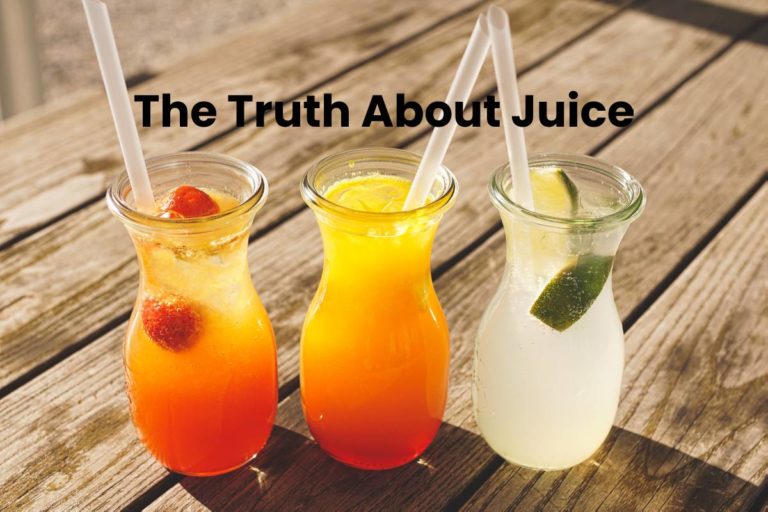
All fruit juices are high in sugar, whether it’s apple, orange, grape juice, or a blend of peach, mango, and blueberries. A 230 ml (8 ounces) serving of juice contains about 30 grams of sugar on average or almost eight teaspoons. It is as much as the same serving of cola-type soft drink.
Also, most commercial juices do not contain the most nutritious parts of the fruit, such as the rind and pulp, which are essential sources of fiber and nutrients. Therefore, it is best to eat the whole fruit to get more fiber and reduce sugar consumption.
Think about it: you are unlikely to eat three apples at once, but it is easy to drink 230ml of juice.
To understand how this fits into the broader picture, explore our Comprehensive Seven Foods To Avoid For Healthy Teeth Pillar.
Sugar In Orange Juice And Soft Drinks
Yes, fruit juice contains “natural” sugar, but that doesn’t make it healthier than the sugar in soft drinks. The WHO classifies the sugar in fruit drinks, like the sugar in soft drinks, as “free sugars.”
Heart & Stroke recommends that people reduce their intake of free sugars to make up less than 10% of total calories (ideally less than 5%). For an adult consuming 2,000 calories per day, this works out to a maximum of 50 grams (or 12 teaspoons) per day of free sugars from all sources, including candies, pastries, soft drinks, and juices. For children, it is even less: we are talking about 8 or 9 teaspoons.
Children are the biggest consumers of juice, which is a problem when fluid replaces other nutritious foods.
However, the juice has a positive aspect: it contains certain nutrients. Studies show that consuming 140 ml or less per day reduces the risk of heart disease. Therefore, drinking a little fruit juice would be acceptable, but consuming too much sugar, regardless of the source (even fruit juice), is strongly discouraged for health.
You may also find our companion piece on Prepare Green Tea Overview helpful for further context.
Vegetable Juices
What about commercial vegetable juice? Tomato juices might only contain two teaspoons of sugar per 230ml, but they also have 650mg of salt, which is enormous. It is not a healthy option.
For some time now, cold-pressed vegetable juices, which are low in sugar and contain no added salt, have been stealing the show. Think of celery and parsley drinks.
Is a drink made with green vegetables, celery, cucumber, and ginger nutritious? Of course, if you can afford it. It is a better choice than sweet fruit juice. However, beware of liquids made with vegetables high in sugar (carrots, sweet potatoes, beets), and vegetable juices also contain fruit to sweeten the taste.
Cold-pressed juices are more nutritious than traditional commercial juices made from concentrate because they are less processed and not hot pasteurized. I have yet to see any comprehensive comparative clinical studies of nutritional benefits and no exact data.
The Power Of Advertising
One word of caution: Excessive juice consumption may pose specific risks for people who take blood thinners or have kidney disease. Discuss with your doctor before consuming a large amount of juice, regardless of the type.
Whole Fruit Is Usually The Better Choice
When deciding between eating a piece of fruit and drinking its juice, whole fruit is generally the more satisfying option. Whole fruit retains its natural structure and provides dietary fiber, which is an important part of a balanced diet. Fruit juice can still provide some vitamins and minerals, but removing much of the fruit’s structure makes it easier to consume a larger amount of sugar in a short period.
For example, eating an orange takes time and usually feels more filling than drinking several oranges as juice. The same principle applies to apples, grapes, berries, and other fruits. Choosing whole fruit more often can therefore help make your overall diet more balanced while still allowing you to enjoy the natural sweetness of fruit.
WHO recommends that carbohydrates should come primarily from foods such as whole grains, vegetables, fruits, and pulses, while noting that fruit juice can contain significant amounts of free sugars even when no additional sugar has been added.
For related practical techniques, check out our insights in Black Coffee Benefits Practical Tips.
Read The Nutrition Label
Not every juice product is the same. Some products are made from 100% fruit juice, while others may contain added sugars, concentrates, syrups, or other ingredients. Reading the nutrition label can help you understand exactly what you are drinking.
Look at the serving size as well as the total sugar content. A bottle may contain more than one serving, meaning that drinking the entire bottle could provide considerably more sugar than you initially expected.
It is also useful to check whether the product is marketed as a juice drink, fruit beverage, nectar, or 100% juice. These terms can represent very different nutritional profiles. If you regularly drink juice, choosing products without added sugars and keeping portions moderate can be a more sensible approach.
Make Water Your Main Drink
For everyday hydration, water remains a simple choice. Making water your primary drink can reduce your reliance on beverages that contain substantial amounts of sugar. You can still enjoy juice occasionally without making it your main source of fluids.
If plain water feels boring, try adding cucumber, mint, lemon slices, or berries for natural flavor. Unsweetened tea can also provide variety without adding significant amounts of sugar.
Another useful strategy is to drink water alongside meals and throughout the day rather than waiting until you feel extremely thirsty. This makes hydration a regular habit rather than something you need to think about occasionally.
Think About Portion Size
The amount you drink matters just as much as the type of juice you choose. A large glass can contain considerably more sugar than a small serving, and it is easy to drink quickly without feeling as full as you would after eating whole fruit.
Instead of filling a large glass, consider having a smaller portion and drinking it with a meal. You can also dilute juice with water if you want to reduce the intensity and overall concentration of the drink.
The goal is not to make fruit juice completely forbidden. Rather, it is about understanding that juice should be treated as a concentrated source of free sugars rather than an unlimited replacement for whole fruit. WHO recommends keeping free sugar intake below 10% of total energy intake, with further reduction to 5% providing additional health benefits.
Explore educational health benchmarks through the National Institutes of Health Health Info.
Build A Balanced Approach
Fruit juice can have a place in a balanced diet, particularly when consumed in sensible portions. However, it should not replace the variety of whole fruits and vegetables that provide fiber and other nutrients.
A practical approach is to make whole fruit the everyday choice, water the main drink, and juice an occasional or moderate addition. This approach allows you to enjoy the taste and nutrients of juice while avoiding excessive sugar consumption.
Small changes can make a meaningful difference. Choosing an apple instead of apple juice, eating an orange instead of drinking orange juice, or selecting water instead of a sugary beverage are simple decisions that can gradually improve the overall quality of your diet.
These do not detoxify the body, strengthen the immune system, or cure cancer. There is no scientific evidence that juice is better than fruits or vegetables. While a small amount of fluid can be part of a healthy diet, you will save money and time by eating fruits and vegetables instead. You will also avoid consuming too much sugar.