Last Updated: September 25, 2026
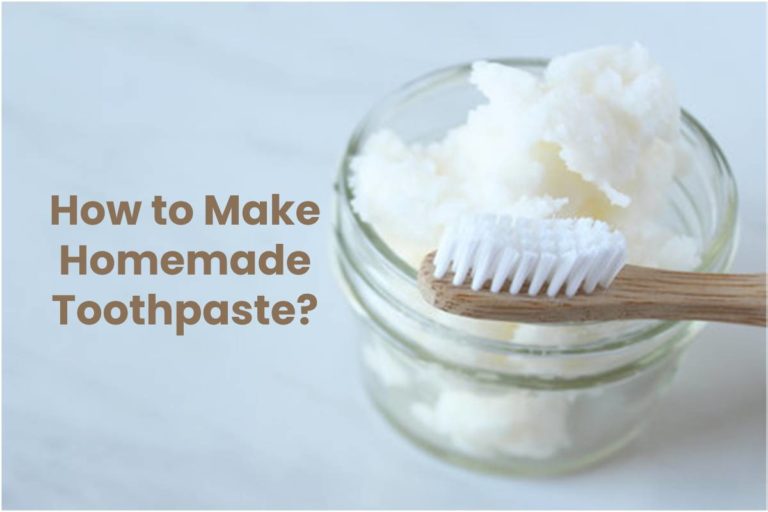
In this Recipe, we are going to see how to make homemade toothpaste.
Making your own or homemade toothpaste gives you the peace of mind of knowing the ingredients you put into your mouth and having 100% natural toothpaste, practical, with few ingredients, easy to make, and without plastic packaging.
this article belongs to Dental Care
Table of Contents
Ingredients
- Four tablespoons (tablespoon size) virgin coconut oil
- One teaspoon (brown teaspoon size) baking soda or white food-grade clay
- Five drops of essential oil of peppermint, eucalyptus, or spearmint, for food use (optional and to taste)
Preparation
Mix all the ingredients, and that’s it! Easy right?
I tell you some more things:
- Make sure that the bicarbonate you use is nutritional since, although we are not going to eat the pasta, it is inevitable that we can swallow a little or that there are remains in the mouth. Also, the internal use of baking soda is more refined.
- You can melt a little the coconut oil in a water bath to better mix the ingredients if you want since this oil solidifies above 25 degrees, although it is not necessary.
- The texture and flavor are very different from traditional pasta. If you use baking soda, the taste is salty. If you dislike it, you can use clay, which has a more neutral flavor.
- Contrary to many recipes that I have seen on the Internet, I add very little for several reasons in which they use more baking soda than coconut oil. First, because coconut oil is already antibacterial, it prevents cavities and kills the bacteria that cause bad breath. And second, because bicarbonate is abrasive and using it in large quantities is not highly recommended due to its effect on enamel. Therefore, instead of adding three tablespoons (soup) (which is what is usually used), I add only one teaspoon (coffee).
- Regarding the essential oil, I use eucalyptus for internal use. Remember that it will contact the mouth, so it is better to buy it for food use, like bicarbonate. Although you can also use it for other external things, I use it to add to the homemade cleaner that I make for the bathroom.
This paste lasts about six months, using it daily by three people. It spreads a lot because it cleans very well, and very little is enough.
Baking soda can be found in a paper bag or bulk at bulk food stores. They sell coconut oil in a glass bottle that you can reuse later. And the essential oil also comes in glass, although it is not an essential ingredient. We also use hydrophil brand bamboo toothbrushes that come without plastic in the packaging and love how they clean.
Refer to peer-reviewed wellness summaries from Harvard Health Publishing Archive.
Things to Keep In Mind
Coconut oil solidifies above 25 degrees. Sometimes small traces of oil can fall down the drain and adhere to the pipes, and as it accumulates, it can become clogged. If this happens to you, you can pour a squirt of vinegar down the drain, let it work for a while, and then pour hot water.
As you can see, it is straightforward and fast to do, with few ingredients and natural. Although in the case of cleaning the teeth, brushing is more important than the paste itself.
Why People Choose Homemade Toothpaste
Homemade toothpaste can be appealing to people who want to simplify their personal-care routine. Commercial toothpaste can contain a long list of ingredients, and some people prefer products made from ingredients they recognize. Preparing toothpaste at home also allows you to control the consistency, flavor, and quantity of each ingredient.
Another reason people explore homemade recipes is packaging. A small homemade batch can be stored in a reusable container, which may reduce the amount of disposable packaging associated with regular toothpaste purchases. For people interested in reducing household waste, this can be one of the more attractive aspects of making personal-care products at home.
However, choosing a toothpaste should involve more than simply considering whether the ingredients are natural. Teeth and gums require protection from cavities and gum disease, and different people have different oral-health needs. A homemade mixture should therefore not automatically be considered equivalent to a professionally formulated toothpaste.
The Importance of Brushing Technique
Regardless of the toothpaste used, brushing technique plays an important role in daily oral hygiene. A toothbrush should reach the outer, inner, and chewing surfaces of the teeth. The brush should also be moved gently around the gumline rather than being pressed aggressively against the gums.
Brushing too hard does not necessarily make teeth cleaner. Excessive pressure can irritate the gums and may contribute to tooth sensitivity or wear over time. Gentle, controlled movements are generally more useful than vigorous scrubbing.
It is also important to spend enough time brushing. Rushing through the process can leave plaque behind, particularly around the back teeth, gumline, and other areas that are difficult to reach.
Homemade Toothpaste and Fluoride
One of the biggest considerations when comparing homemade toothpaste with conventional toothpaste is fluoride. Fluoride is widely used in dental care because it helps strengthen tooth enamel and protect against cavities. Many professionally formulated toothpastes contain an appropriate concentration of fluoride for this reason.
A homemade recipe containing coconut oil, baking soda, clay, or essential oil does not necessarily provide the same cavity protection as a fluoride toothpaste. This distinction is important, especially for people who are at increased risk of tooth decay.
People with frequent cavities, sensitive teeth, gum disease, braces, dry mouth, or other oral-health concerns should discuss their toothpaste choice with a dentist. A professional can recommend a product based on the individual’s dental history rather than relying only on general claims about natural ingredients.
Understanding Baking Soda
Baking soda is a common ingredient in homemade oral-care recipes. It has a mild abrasive quality and is often included because it can help remove surface deposits during brushing. Its alkaline nature also contributes to the characteristic salty taste of homemade toothpaste.
The amount used matters. More baking soda does not necessarily mean better cleaning. Using an excessive quantity or brushing with excessive pressure can make a homemade mixture unnecessarily abrasive.
For this reason, anyone experimenting with a baking-soda-based toothpaste should pay attention to signs of sensitivity or irritation. If teeth become unusually sensitive or the gums feel uncomfortable, it is sensible to stop using the mixture and consult a dental professional.
The Role of Coconut Oil
Coconut oil is popular in natural oral-care routines and is frequently used as a base for homemade toothpaste because of its texture. It can become soft or liquid when warmed and solidify when temperatures fall.
Its smooth consistency also makes it easy to combine with other ingredients. However, the presence of coconut oil does not mean that a homemade toothpaste can replace every aspect of professional dental care.
Coconut oil should therefore be viewed as one ingredient in a homemade mixture rather than as a complete solution for preventing dental disease. Regular brushing, cleaning between teeth, balanced dietary habits, and dental examinations remain important parts of oral hygiene.
Choosing Essential Oils Carefully
Essential oils can provide flavor and a refreshing sensation, which is why peppermint and spearmint are popular choices for oral-care products. Some homemade recipes also use other essential oils.
Because the mixture will come into contact with the mouth, it is important to use only ingredients that are specifically appropriate for the intended use. Essential oils are highly concentrated, and using more does not make a toothpaste more effective.
The safest approach is to follow appropriate usage guidance for the specific product. People who experience burning, irritation, swelling, or another unusual reaction should discontinue the product.
Children may also require additional caution because they can swallow toothpaste or homemade mixtures more easily than adults. Parents should speak with a dental professional before introducing homemade oral-care products into a child’s routine.
Homemade Toothpaste Storage
Storage is another important consideration when preparing toothpaste at home. Because the mixture does not contain the same preservatives and controlled manufacturing conditions as commercial toothpaste, it should be kept clean and protected from contamination.
Use a clean, dry container with a secure lid. Avoid repeatedly placing a wet toothbrush directly into the container because moisture can be introduced into the mixture.
It can be more hygienic to remove a small amount with a clean utensil before brushing. This also helps prevent several people from repeatedly touching the same batch with their toothbrushes.
The appearance, smell, and texture of the mixture should be monitored. If it develops an unusual odor, changes significantly in appearance, or appears contaminated, it should be discarded rather than used.
How Often Should You Brush?
A consistent oral-care routine is more important than making the toothpaste recipe complicated. Most dental-care routines recommend brushing the teeth twice a day with an appropriate toothbrush and toothpaste.
Morning brushing helps clean the teeth after overnight plaque accumulation, while brushing before bed is particularly important because it removes food particles and plaque before a long period without eating or drinking.
Cleaning between the teeth is also important because a toothbrush cannot reach every interdental surface. Dental floss or an appropriate interdental cleaner can help clean areas that are difficult to access with a toothbrush alone.
Do Not Forget the Gumline
The gumline is one of the most important areas to clean carefully. Plaque can accumulate where the teeth meet the gums, and inadequate cleaning can contribute to gum irritation.
Instead of concentrating only on the visible surfaces of the teeth, gently angle the toothbrush toward the gumline and use controlled movements. This approach can help remove plaque without unnecessary pressure.
Healthy gums should not be routinely ignored simply because the teeth appear clean. Swelling, persistent bleeding, tenderness, or changes in gum appearance should be discussed with a dental professional.
Homemade Toothpaste Does Not Replace Dental Visits
Making toothpaste at home can be an interesting personal-care project, but it does not replace professional dental examinations. A dentist can identify cavities, gum problems, damaged restorations, enamel wear, and other conditions that may not be obvious at home.
Regular examinations can also help detect problems while they are still manageable. Professional cleaning may be recommended when plaque has hardened into tartar that cannot be removed effectively with normal brushing.
This is particularly important for people who already have a history of cavities or periodontal problems. A homemade toothpaste should not be used as a reason to delay professional treatment.
When to Stop Using a Homemade Toothpaste
Not every oral-care product works well for every person. If a homemade toothpaste causes burning, gum irritation, increased sensitivity, unusual dryness, or discomfort, discontinue its use.
Persistent symptoms should be evaluated rather than simply treated by changing the recipe. Dental pain, bleeding gums, swelling, loose teeth, persistent bad breath, or sensitivity that does not improve can indicate an underlying dental problem.
A dental professional can determine whether the symptoms are related to the toothpaste, brushing technique, an existing dental condition, or another cause.
Natural Does Not Always Mean Better
The word “natural” can make an ingredient sound automatically safer or more effective, but natural and effective are not interchangeable terms. Some natural substances can irritate the mouth, while some professionally formulated ingredients have been extensively studied for oral-health purposes.
The best oral-care routine is one that protects the teeth and gums while fitting the person’s individual needs. For some people, a conventional fluoride toothpaste may be more appropriate. Others may be interested in natural products for specific reasons and can discuss suitable options with their dentist.
The important point is to evaluate a toothpaste based on what it actually provides rather than assuming that a homemade product is automatically healthier because it contains fewer ingredients.
Making Your Oral-Care Routine More Sustainable
For people interested in reducing waste, there are several ways to make oral care more environmentally conscious without compromising basic dental hygiene.
Reusable storage containers, responsible disposal of toothbrushes, and choosing products with reduced packaging can all contribute to a lower-waste routine. A bamboo toothbrush may appeal to people who prefer alternatives to conventional plastic toothbrush handles.
However, sustainability should still be balanced with hygiene and effectiveness. Toothbrushes need to be replaced when their bristles become worn or damaged, regardless of the material used for the handle.
A Simple Daily Routine
A straightforward oral-care routine can be easier to maintain than a complicated one. Begin the day by brushing thoroughly and cleaning the areas between the teeth. During the day, rinse the mouth with water after meals when appropriate and pay attention to foods and drinks that may contribute to tooth decay.
At night, brush again and clean between the teeth. Avoid treating brushing as something that should be completed as quickly as possible. Giving enough attention to every area of the mouth can make the routine much more effective.
The toothbrush itself should also be kept clean and allowed to dry between uses. Storing it in a way that allows airflow can help prevent unnecessary moisture from remaining around the bristles.
Final Thoughts on Homemade Toothpaste
Homemade toothpaste can be simple to prepare and may appeal to people who enjoy natural ingredients, minimal packaging, and DIY personal-care products. Coconut oil, baking soda or clay, and a suitable flavoring ingredient can create a simple mixture with a different texture and taste from conventional toothpaste.
At the same time, homemade toothpaste should not be viewed as automatically equivalent to commercially formulated dental products. In particular, the absence of fluoride may be an important consideration for cavity prevention, depending on a person’s individual oral-health needs.
Whatever toothpaste you choose, consistent brushing, gentle technique, cleaning between the teeth, and regular dental examinations remain central to maintaining a healthy mouth. If you have existing dental problems or a high risk of cavities or gum disease, professional guidance is especially valuable.
As you can see, it is straightforward and fast to do, with few ingredients and natural. Although in the case of cleaning the teeth, brushing is more important than the paste itself.