Last Updated: September 14, 2026
Finding the perfect dress shirt isn’t about grabbing the first one in your size. Nearly 68% of men wear incorrectly fitted dress shirts, leading to an unprofessional appearance and physical discomfort throughout the day.
The right dress shirt for body type men can transform your entire look—making you appear taller, slimmer, more muscular, or better proportioned depending on your specific build.
In this comprehensive guide, you’ll discover exactly which dress shirt styles, fits, cuts, and details work best for your body type, plus expert styling techniques that Indian men can use to look sharp in any professional or formal setting.
this article belongs to Fashion
For more fashion inspiration and styling ideas, explore AreYouFashion.
Table of Contents
Understanding Men’s Body Types
Before selecting dress shirts, identify your body type. Most men fall into one of five categories:
Athletic/Muscular Build: Broad shoulders, defined chest, narrow waist, muscular arms. Often faces tight shoulders or loose waist issues.
Slim/Lean Build: Narrow shoulders, flat chest, minimal body fat. Standard shirts often look baggy or oversized.
Heavy/Large Build: Broader midsection, fuller chest, wider waist. Needs comfort without appearing boxy.
Tall Build: Above 6 feet with longer torso and arms. Regular sizes are too short.
Short/Petite Build: Under 5’7″ with shorter torso and arms. Regular shirts overwhelm the frame.
Understanding your body type is the foundation of finding the ideal dress shirt for body type men.
If you are also interested in exploring another fashion-focused platform, you can read this guide to ifitfashion com for more outfit ideas, styling inspiration, and fashion-related content.
The 5 Critical Fit Points Every Man Must Know
1. Shoulder Seam Placement
The shoulder seam should sit exactly where your shoulder ends and arm begins. This is non-negotiable.
Too wide: Creates a sloppy, oversized appearance. Too tight: Restricts movement and creates pulling across the back.
2. Chest and Torso Fit
You should be able to pinch 2-3 inches of fabric on each side of your torso when the shirt is buttoned.
More than 3 inches: Too loose, appears unprofessional. Less than 2 inches: Too tight, creates pulling and button gaps.
3. Sleeve Length
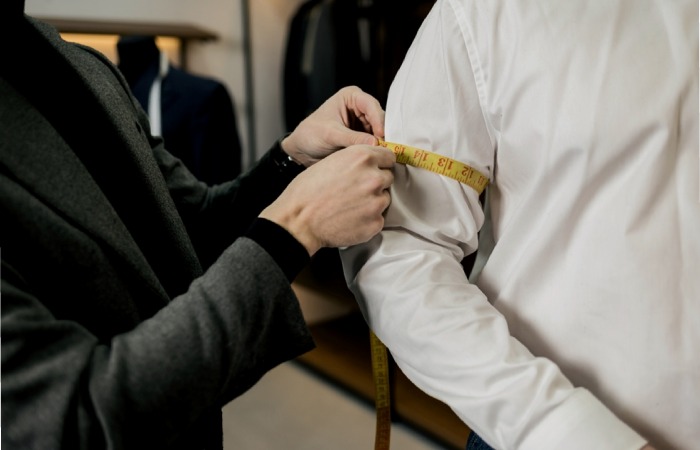
When arms hang naturally, sleeves should end at your wrist bone, showing ¼ to ½ inch of cuff when wearing a jacket.
4. Collar Size
You should fit two fingers comfortably between your neck and the buttoned collar.
Too tight: Causes discomfort and red marks. Too loose: Looks sloppy and tie knots slip.
5. Shirt Length
The shirt should cover your belt when arms are raised but not bunch excessively when tucked.
For proper dress shirt measurements casual untucked wear, the shirt should end mid-fly.
Dress Shirts for Athletic/Muscular Body Type
Athletic men face a common problem: shirts that fit the shoulders and chest are too loose at the waist.
Best Fit Options
Tapered Fit/Athletic Fit: Specifically designed with extra room in shoulders and chest, narrowing at the waist.
Slim Fit with Stretch: Provides flexibility across muscular areas while maintaining a clean silhouette.
Styling Guidelines
- Choose shirts with darts or side seams for waist suppression
- Opt for stretch cotton blends (2-5% elastane) for comfort
- Avoid boxy classic fits that hide your physique
- Button-down collars work well with muscular necks
- Roll sleeves to showcase arms without tightness
Recommended Fabrics
Performance cotton blends, stretch poplin, and athletic-fit Oxford cloth provide the best combination of structure and flexibility.
Pattern & Color Choices
Solid colors in navy, white, and light blue emphasize your build without distraction.
Thin horizontal stripes can broaden the chest if desired.
Avoid overly busy patterns that break up your physique.
Common Mistakes
Mistake: Buying regular fit to accommodate shoulders, resulting in excess fabric at waist.
Solution: Invest in athletic-cut shirts or get regular shirts tailored at the sides.
Dress Shirts for Slim/Lean Body Type
Slim men need shirts that create visual volume without looking oversized.
Best Fit Options
Slim Fit: Cut closer to the body with minimal excess fabric.
Extra Slim Fit: Even more tailored for very lean frames.
Styling Guidelines
- Choose shirts with chest pockets to add visual weight
- Opt for spread or cutaway collars (they broaden the upper body)
- Layer with sweaters or vests to create dimension
- Consider shirts with visible texture (Oxford, twill)
- Avoid extra fabric that creates a “swimming in clothes” look
Recommended Fabrics
Thicker fabrics like Oxford cloth, chambray, and textured weaves add substance.
Avoid thin, see-through fabrics that emphasize thinness.
Pattern & Color Choices
Horizontal stripes add width across the chest and shoulders.
Checks and plaids create visual volume.
Layered colors (shirt + tie + sweater) build dimension.
Avoid vertical stripes that make you appear even thinner.
Size Adjustment Tips
If you’re between sizes, choose the smaller size for slim fit.
Ensure sleeves aren’t too long—have them shortened if needed.
Consider brands that offer “slim” or “fitted” cuts as their standard sizing.
Dress Shirts for Heavy/Large Body Type
Larger men need shirts that provide comfort while creating a streamlined appearance.
Best Fit Options
Classic Fit/Regular Fit: Offers room through chest and midsection without clinging.
Relaxed Fit: Provides additional comfort for fuller builds.
Big & Tall Sizes: Properly proportioned for larger frames.
Styling Guidelines
- Look for shirts with vertical design elements
- Choose point or spread collars (avoid small collars)
- Ensure proper torso length to avoid shirt untucking
- Opt for non-iron fabrics to maintain crisp appearance
- Never size up to hide weight—proper fit is slimming
Recommended Fabrics
Structured fabrics like poplin and pinpoint Oxford maintain shape without clinging.
Medium-weight cotton prevents transparency.
Avoid thin, clingy fabrics and heavy, thick materials.
Pattern & Color Choices
Vertical stripes: Create an elongating, slimming effect. The thinner the stripe, the stronger the effect.
Solid dark colors: Navy, charcoal, and black are naturally slimming.
Small patterns: Microchecks and subtle patterns work better than large, bold designs.
Monochromatic looks: Matching shirt and tie colors create a continuous vertical line.
Avoid large horizontal stripes and bold, busy patterns.
Dress Shirts for Tall Body Type
Tall men (6’2″ and above) need shirts with proper length proportions.
Best Fit Options
Tall Sizes (LT, XLT, etc.): Specifically designed with longer torso and sleeves.
Custom/Made-to-Measure: Ensures perfect length without excess width.
Sizing Specifications
Standard shirts typically have 32-33″ sleeves; tall sizes offer 35-37″.
Torso length increases by 2-3 inches in tall sizes.
Styling Guidelines
- Always check sleeve length before purchasing
- Look for brands offering specific “tall” lines
- Ensure the shirt stays tucked during movement
- Consider having shirts custom-made if off-rack doesn’t work
- Balance proportions with appropriate collar size
Recommended Brands for Tall Men
Many Indian and international brands now offer tall-specific sizing:
- Brooks Brothers (Extra Length options)
- Charles Tyrwhitt (Tall Fit range)
- Van Heusen (Tall sizes)
- Arrow (Custom Fit Tall)
Pattern & Color Choices
Horizontal elements (stripes, large checks) can balance extreme height.
Avoid very small patterns that emphasize height.
Wearing patterned shirts with solid trousers creates visual breaks.
Dress Shirts for Short/Petite Body Type
Men under 5’7″ need properly proportioned shirts that don’t overwhelm their frame.
Best Fit Options
Short Sizes (S, MS, etc.): Designed with shorter torso and sleeves.
Fitted Cuts: Reduce excess fabric that makes you appear smaller.
Asian Fit: Often better proportioned for shorter builds.
Styling Guidelines
- Avoid long shirt tails that hang too low
- Choose fitted (not baggy) cuts to maintain proportion
- Opt for smaller collar spreads (avoid oversized collars)
- Keep sleeve cuffs close to wrist, not overlapping hands
- Consider shirts designed for Asian markets (better proportions)
Key Measurements
Sleeve length should be 32-33″ (standard is 34-35″).
Torso length should allow tucking without excessive fabric.
Pattern & Color Choices
Vertical stripes: Create the illusion of height.
Solid colors: Maintain clean lines without breaking up your frame.
Monochromatic looks: Shirt and trouser in similar tones elongate appearance.
Small-scale patterns: Proportional to your frame.
Avoid large patterns, wide horizontal stripes, and contrast waistbands that cut your height visually.
Shirt Fit Types Explained
Slim Fit
- Tapers from chest to waist
- Minimal excess fabric
- Modern, stylish appearance
- Best for: Slim and athletic builds
- Avoid if: You have a fuller midsection
Classic/Regular Fit
- Straight cut from chest to hem
- Comfortable with room to move
- Traditional, professional look
- Best for: Heavy builds, older professionals
- Avoid if: You want a modern, tailored appearance
Athletic/Tapered Fit
- Extra room in shoulders and chest
- Tapered at waist
- Accommodates muscular builds
- Best for: Athletic, muscular men
- Avoid if: You have a slim or heavy build
Relaxed Fit
- Generous cut throughout
- Maximum comfort
- Casual appearance
- Best for: Larger builds, casual settings
- Avoid for: Business formal occasions
Collar Styles for Different Face Shapes
The right collar enhances your facial structure.
Point Collar
Best for: Long, narrow faces Why: The narrow spread doesn’t widen the face further
Spread Collar
Best for: Round or wide faces Why: The wider angle balances facial width
Cutaway Collar
Best for: Round faces, thick necks Why: The extreme spread creates vertical lines
Button-Down Collar
Best for: Casual settings, all face shapes Why: Versatile and less formal
Band Collar (Mandarin)
Best for: Modern, casual looks Why: Creates a clean, minimal aesthetic
Fabric Guide: Choosing Quality Materials
Cotton Poplin
Characteristics: Smooth, crisp finish Best for: Business formal, all body types Weight: Light to medium
Oxford Cloth
Characteristics: Textured, basket weave Best for: Casual business, adds visual weight (good for slim builds) Weight: Medium to heavy
Twill
Characteristics: Diagonal weave, soft drape Best for: Comfortable daily wear, all body types Weight: Medium
Linen
Characteristics: Breathable, wrinkles easily Best for: Hot climates, casual settings Weight: Light Note: Requires frequent ironing or accepting a relaxed look
Performance/Stretch Fabrics
Characteristics: Cotton with 2-5% elastane Best for: Athletic builds, active professionals Weight: Varies Benefit: Allows movement without restriction
Fabric Quality Indicators
- Thread count: 80-120 is good; 140+ is premium
- Single-ply vs. two-ply: Two-ply is more durable
- Long-staple cotton: Softer, more durable
- Weave tightness: Tighter weaves look more formal
Color Psychology and Professional Settings
White Shirts
Message: Authority, cleanliness, formality Best for: Interviews, formal business, conservative industries Suits all: Body types and skin tones
Light Blue
Message: Trustworthy, approachable, confident Best for: Everyday business, client meetings Flattering for: Most skin tones, especially Indian complexions
Navy/Dark Blue
Message: Professional, reliable, sophisticated Best for: Business settings, creates slimming effect Best on: All body types, especially heavy builds
Pink/Lavender
Message: Modern, confident, creative Best for: Creative industries, after establishing credibility Works with: Medium to dark skin tones
Patterns
Thin stripes: Professional, slimming (vertical) or broadening (horizontal) Checks: Business casual, adds visual interest Avoid in formal settings: Loud patterns, novelty prints
For more inspiration on polished fashion and sophisticated style, explore Vanessa Gettys’ best-dressed style.
Seasonal Considerations for Indian Climate
Summer (March-June)
Fabric: Lightweight cotton, linen blends Color: Light blues, whites, pastels Fit: Not too tight—allow air circulation Sleeve: Consider short sleeves for extreme heat
Monsoon (July-September)
Fabric: Quick-dry synthetics, wrinkle-resistant cotton Color: Medium tones that don’t show water marks Feature: Roll-up sleeves, water-resistant treatments
Winter (October-February)
Fabric: Heavier Oxford, flannel, twill Color: Deeper tones, darker colors Layering: Can layer with sweaters, blazers Feature: Consider French cuffs for cufflinks
Sleeve Styles and When to Use Them
Barrel Cuffs (Button Cuffs)
Fastening: 1-2 buttons Formality: Business casual to formal Best for: Everyday wear, all body types
French Cuffs
Fastening: Cufflinks (folds back and doubles) Formality: Formal business, special occasions Best for: Tall men, formal settings Avoid: Casual settings, very short men (adds bulk)
Convertible Cuffs
Fastening: Buttons or cufflinks Formality: Versatile Best for: Men who want flexibility
Common Dress Shirt Mistakes Men Make
Mistake #1: Buying Based Only on Neck Size
Neck size alone doesn’t determine proper fit. Two men with 16″ necks can have completely different body types.
Solution: Always try on or measure chest, waist, and sleeve length.
Mistake #2: Ignoring Shoulder Fit
This is the hardest alteration to fix. If shoulders don’t fit, move on.
Solution: Shoulder seam must sit at shoulder edge—no exceptions.
Mistake #3: Wearing Shirts Too Long Untucked
If wearing untucked (casual only), the shirt should end mid-fly, not covering your entire rear.
Solution: Buy casual-length shirts or have formal shirts hemmed for untucked wear.
Mistake #4: Wrong Collar Size
Discomfort all day or a sloppy appearance.
Solution: Measure your neck properly—most men wear wrong size for years.
Mistake #5: Ignoring Sleeve Length
Sleeves bunching at wrists or barely covering arms looks unprofessional.
Solution: Measure from center back neck to wrist with arm slightly bent.
Mistake #6: Choosing Fashion Over Fit
Trendy styles don’t matter if the fit is wrong for your body.
Solution: Prioritize fit first, then choose from styles that work for your build.
Mistake #7: Not Considering Alterations
Most off-rack shirts need minor adjustments.
Solution: Budget ₹300-800 for basic alterations—worth the investment.
How to Measure Yourself for Dress Shirts
Neck Size
Measure around the base of your neck where collar sits. Add ½ inch for comfort.
Sleeve Length
Start at center back neck, across shoulder, down to wrist bone with arm slightly bent.
Chest
Measure around the fullest part of chest under arms, keeping tape parallel to floor.
Waist
Measure around natural waistline where you wear trousers.
Shoulder Width
Measure from shoulder point to shoulder point across the back.
Quick Reference: Body Type Chart
| Body Type | Best Fit | Avoid | Key Feature |
|---|---|---|---|
| Athletic | Tapered, Athletic Fit | Boxy Classic Fit | Stretch fabric |
| Slim | Slim, Extra Slim | Regular, Relaxed | Horizontal patterns |
| Heavy | Classic, Relaxed | Slim, Tight | Vertical stripes |
| Tall | Tall Sizes (LT, XLT) | Regular lengths | Extra sleeve length |
| Short | Short Sizes, Fitted | Long tails, oversized | Proportionate cuts |
Where to Buy the Right Dress Shirt for Body Type Men in India
Budget-Friendly (₹800-1500)
- Peter England
- Van Heusen
- Arrow
- Louis Philippe (sale items)
Mid-Range (₹1500-3000)
- Raymond
- Blackberrys
- Park Avenue
- Allen Solly
Premium (₹3000-8000)
- Brooks Brothers
- Charles Tyrwhitt (online)
- Hugo Boss
- Ralph Lauren
Custom/Made-to-Measure (₹2500+)
- Raymond Made to Measure
- Bombay Shirt Company
- Tailor-made from Jermyn Street (Mumbai, Delhi)
Shirt Care Tips for Longevity
Washing
- Wash in cold water to prevent shrinkage
- Use mild detergent
- Button all buttons to maintain shape
- Wash white and colored shirts separately
Drying
- Air dry when possible
- If using dryer, remove while slightly damp
- Never over-dry—causes shrinkage and fabric damage
Ironing
- Iron while slightly damp for easier pressing
- Use appropriate heat for fabric type
- Iron collar and cuffs first
- Use spray starch for crisp appearance
Storage
- Hang on proper hangers (not wire)
- Button top button to maintain collar shape
- Store in cool, dry place
- Use garment bags for long-term storage
The 5-Shirt Wardrobe for Every Body Type
Build a versatile collection with these essentials:
1. White Classic Point Collar: For interviews, formal events, conservative settings
2. Light Blue Spread Collar: Versatile for daily business wear
3. Navy/Charcoal Solid: Creates slimming effect, pairs with everything
4. Fine Stripe (Vertical): Adds visual interest while maintaining professionalism
5. Casual Oxford or Chambray: For business casual Fridays, relaxed meetings
This combination works for all body types with appropriate fit adjustments.
When to Get Professional Tailoring
Even the best off-rack shirt benefits from minor alterations.
Common Alterations
Sleeve shortening: ₹200-400 Torso tapering: ₹300-600 Dart addition: ₹400-800 Collar adjustment: ₹300-500 Hem shortening: ₹200-400
Worth Tailoring When
- Shoulders fit perfectly but waist is loose
- Sleeves are slightly long
- Torso is boxy but chest fits well
- You found the perfect fabric/color but fit is slightly off
Not Worth Tailoring When
- Shoulders don’t fit (extremely difficult/expensive)
- Multiple major alterations needed (buy better-fitting shirt)
- Alteration cost approaches new shirt cost
Final Thoughts
The perfect dress shirt for body type men isn’t about following generic size charts—it’s about understanding your unique build and choosing cuts, fabrics, and styles that complement your physique.
Athletic men need tapered fits with stretch, slim men benefit from patterns and texture, heavy builds require classic fits with vertical elements, tall men must prioritize length proportions, and shorter men should focus on fitted cuts without excess fabric.
Start by identifying your body type, learn the five critical fit points, invest in quality basics, and don’t hesitate to tailor off-rack purchases. A properly fitted dress shirt transforms not just your appearance but your confidence in professional and formal settings.
Remember: fit always matters more than brand name or price. Master these principles, and you’ll look sharp regardless of your body type.
FAQs
Q: What dress shirt fit is best for athletic men? A: Athletic or tapered fit works best, offering extra room in shoulders and chest while narrowing at the waist. Look for stretch fabric (2-5% elastane) for comfort and mobility.
Q: Should slim men wear slim fit or regular fit shirts? A: Slim or extra-slim fit is ideal. Regular fit will appear baggy. Choose horizontal patterns and textured fabrics to add visual volume.
Q: What color dress shirt makes you look slimmer? A: Navy, charcoal, and black create a slimming effect. Pair with vertical stripes for maximum impact. Avoid light colors and horizontal patterns.
Q: How should a dress shirt fit in the shoulders? A: The shoulder seam must sit exactly where your shoulder ends and arm begins. This is non-negotiable and the hardest part to alter.
Q: Can heavy men wear slim fit dress shirts? A: No. Slim fit will be uncomfortable and create unflattering pulling. Choose classic or relaxed fit with proper tailoring at the waist if needed.
Q: What sleeve length is correct for dress shirts? A: Sleeves should end at your wrist bone when arms hang naturally, showing ¼-½ inch of cuff below a jacket sleeve.
Q: Should short men wear vertical or horizontal stripes? A: Vertical stripes create the illusion of height. Avoid wide horizontal stripes and large patterns that overwhelm your frame.
Q: How much should dress shirts cost in India? A: Budget: ₹800-1500, Mid-range: ₹1500-3000, Premium: ₹3000-8000, Custom: ₹2500+. Fit matters more than price.