Last Updated: January 22, 2026
Routine diagnostic procedures, like pregnancy bloodwork, pelvic and fibroid ultrasounds, are essential to early detection, accurate diagnosis, and effective treatment planning in women’s health. At Viva Eve, these tests are delivered within a supportive, integrated care model that values patient education, thoroughness, and collaboration at every step.
Table of Contents
The Importance of Routine Prenatal Lab Tests and Women’s Health Screenings
Testing is a diagnostic process in medicine used to determine key factors affecting health and wellness, to identify causes, and develop solutions. Without testing, ensuring health and wellness can become an uphill battle. Health can change quickly, so staying up to date with testing may be imperative.
Pregnancy Blood Tests
Carrying a pregnancy is a stressful and challenging process for the body, and healthcare professionals are tasked with ensuring that process happens in a healthy and safe way, for both the mom and the baby. One way professionals ensure proper care is with blood testing during early pregnancy.
A complete blood count (CBC) is a test doctors use to count the different cells that make up your blood. These numbers may then reveal adverse health complications.
Red blood cell count may show anemia, including specific types, or a general low hematocrit, as low hematocrit is often a sign. The number of white blood cells in your sample can indicate immune system issues. Platelet count shows whether you have blood-clotting problems, an essential factor in pregnancy. Of course, good numbers are a good sign and reveal health and wellness.
Blood tests also reveal blood type and Rh factor, which are essential for fetal health. The Rh factor is a protein on the surface of red blood cells; its presence or absence determines whether a person has a “positive” or “negative” blood type, respectively. If a pregnant person is Rh negative and their fetus is Rh positive, their body will produce antibodies against the Rh factor, damaging the fetus’s red blood cells.
Pregnancy blood tests provide key health indicators that help doctors deliver the best possible care to their patients and are an essential part of prenatal care.
Pelvic and Fibroid Ultrasounds
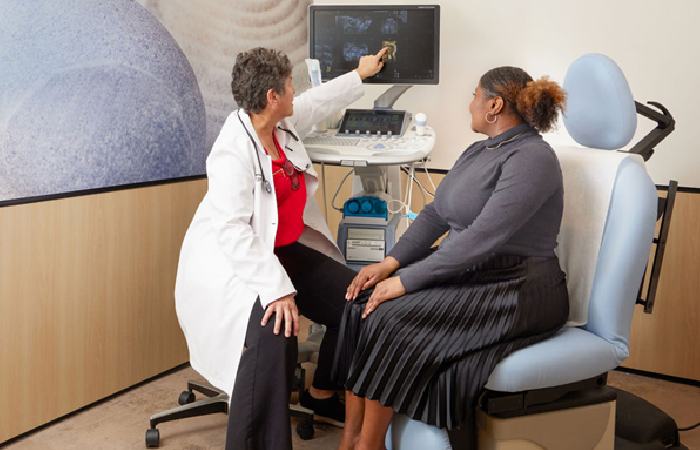
A pelvic ultrasound, per Johns Hopkins Medicine, is a noninvasive diagnostic exam used to create an image of the female pelvis. During the exam, the transducer or ultrasound wand emits ultrasound waves, literal sound waves at a frequency too high to be heard, that move through the body and bounce off organs like an echo.
Pelvic ultrasounds can be transabdominal or transvaginal, meaning the transducer is placed on the abdomen to image through the skin or a specialized transducer is inserted into the vaginal canal with appropriate sanitary precautions.
These ultrasounds are performed for several reasons, typically related to uterine, ovarian, cervical, or vaginal health. A fibroid ultrasound is specifically undertaken to discover or confirm the size, shape, and location of a fibroid, a type of benign tumor often located within the pelvis.
Fibroids, while tumors, are not cancerous and do not increase a patient’s risk of contracting uterine cancer. They can carry symptoms such as heavy and prolonged periods, bleeding between periods, and pelvic pain, so pelvic ultrasounds are an essential part of the diagnostic process and complete health profile.
Key Takeaways
Women need routine testing to stay on top of evolving health needs. For pregnant people, blood testing is a required part of early pregnancy to preserve both the parents’ and the child’s health. Complications can arise if red blood cell, white blood cell, or platelet counts are not within normal ranges. Rh factor testing also occurs as a part of pregnancy blood testing to protect the parent and child from complications.
Ultrasound and fibroid-specific ultrasound are additional essential tests. Ultrasounds can assess a range of uterine, cervical, and ovarian conditions, including the presence, shape, and size of fibroids. While not cancerous and not linked to uterine cancer, fibroids have several adverse symptoms, and discovery through testing is an integral part of addressing solutions or management.
Testing is just the beginning of patient care. At Viva Eve, they emphasize continuous care delivered with transparency and compassion, supported by prenatal testing and ultrasounds to enhance patient safety and health.